
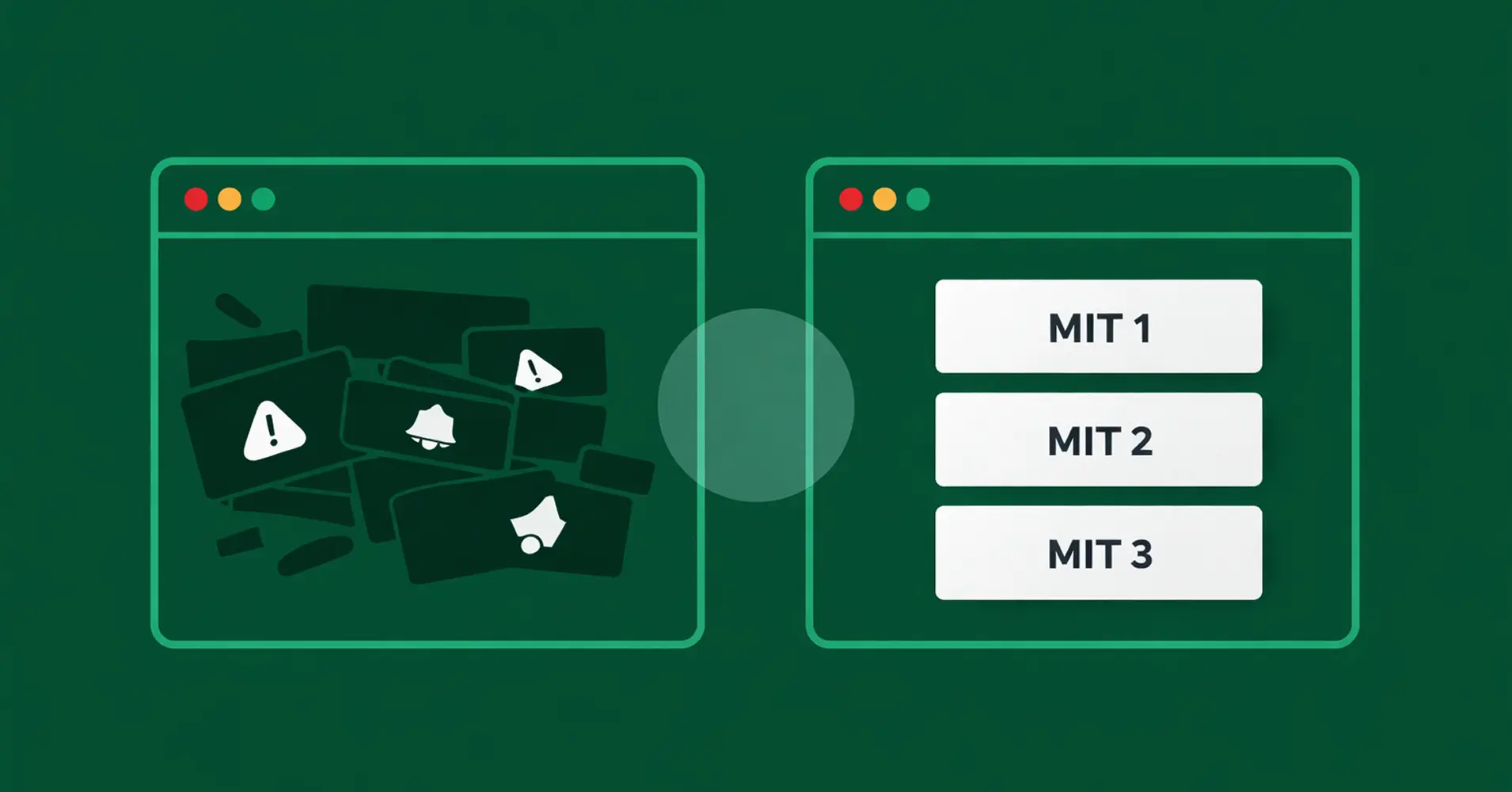
How to Prioritize Tasks: A Practical Guide for Overwhelmed People

By Uttam Kumar Dash
February 26, 2026
Last Modified: February 26, 2026


You sit down to work and already feel behind. The inbox has 47 unread messages. A deadline from yesterday is still unfinished. Three Slack pings just came in. And someone just labeled a new task “urgent.” Sound familiar?
The problem is rarely effort. Most people are working hard. The real issue is not knowing which thing deserves your energy right now.
In this guide, we will learn exactly how to prioritize tasks, which frameworks actually work, and how to build a system that holds up on your busiest days.
TL;DR
- Prioritization is about doing less of the wrong things, not doing more overall
- Urgency and importance are two different things and confusing them is the root of most task overload
- Three frameworks cover most situations: the Eisenhower Matrix, the MoSCoW Method, and the MIT Method
- A weekly brain dump and a protected first 90 minutes are the two habits that make any framework stick
- Poor prioritization has real downstream costs for teams including burnout, backlogs, and missed deadlines
- Delegating is a core part of prioritization, not a shortcut
What does it actually mean to prioritize tasks?
Prioritizing tasks means deciding the order in which work gets your time, focus, and energy based on its actual value, not how loud it is.
Most people treat their to-do list as a queue. First in, first served. But that approach treats a five-minute email reply as equal to a deliverable that takes three hours and affects ten other people. Prioritization breaks that default. It forces a conscious answer to a simple question: what should I be doing right now, and what can wait?
This is not just a personal productivity concept. For customer service teams, operations managers, and support professionals, poor task prioritization is directly linked to support ticket backlogs, missed SLAs, and team burnout.
Why most people struggle to prioritize
Before reaching for a framework, it helps to understand why prioritization breaks down in the first place.
- Urgency feels like importance: A ping feels pressing. A ringing phone feels critical. But urgency is about timing and importance is about impact. Conflating the two is the most consistent reason people end the day feeling like nothing got done.
- The full list is never visible at once: Tasks live in email, in Slack, in notebooks, and in your head. When you cannot see the full scope of your work, you cannot sequence it well. Everything feels equally important because you are managing it all from memory.
- No one wants to say no: Every new request carries social weight. But without the ability to push back or delay, every task becomes priority one — which means nothing actually is.
- Task switching drains more than people realize: Research by the American Psychological Association confirms that bouncing between tasks reduces productivity by up to 40%.
3 Frameworks that work (and when to use each)
You do not need ten methods. These three cover the vast majority of real situations.
1. The Eisenhower Matrix
Built around one powerful distinction: urgent vs. important. In a 1954 speech, Dwight D. Eisenhower described it plainly; the urgent are not important, and the important are never urgent.
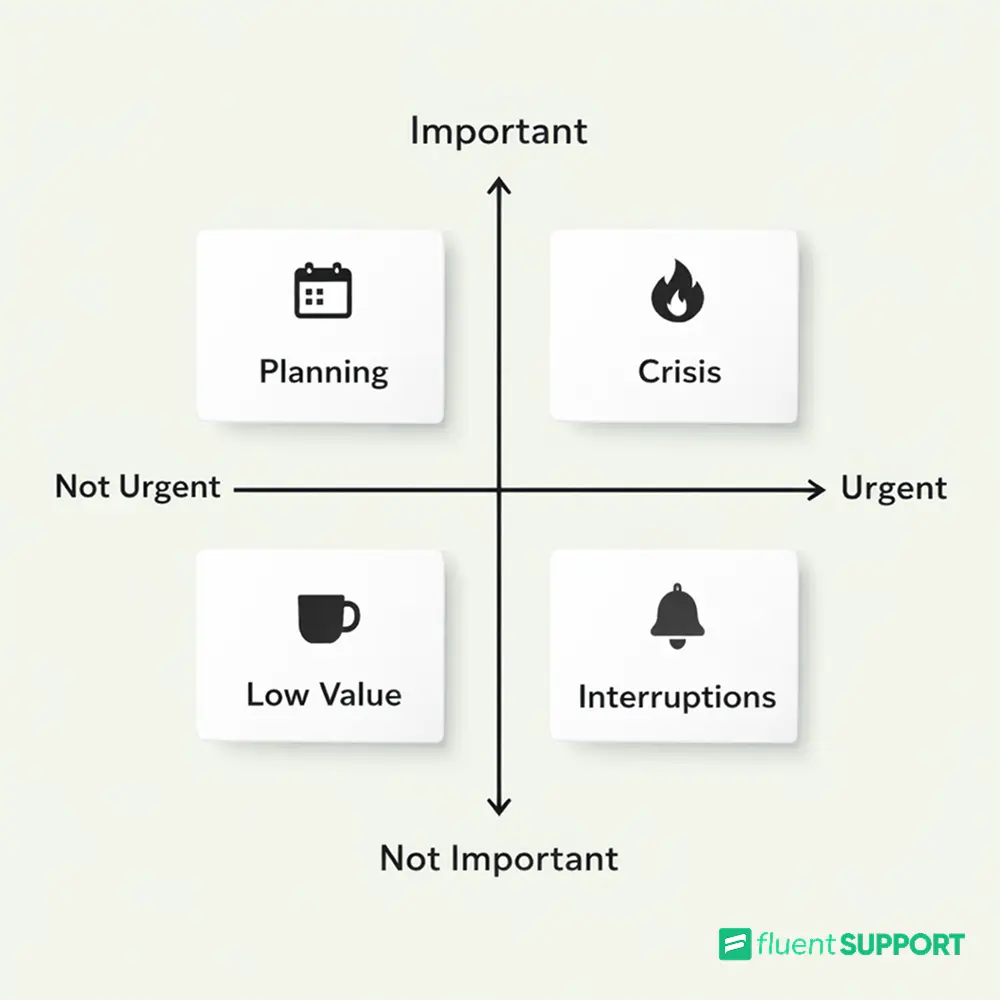
The matrix creates four quadrants:
| Quadrant | Description | Action |
| Urgent + Important | Crisis, hard deadline, real consequence | Do it now |
| Important + Not Urgent | Strategy, planning, skill-building | Schedule it |
| Urgent + Not Important | Interruptions, most pings and requests | Delegate it |
| Not Urgent + Not Important | Busy work, low-value habits | Cut it |
The most valuable quadrant is the second one. Important but not urgent work is exactly what busy people skip. And it is exactly what separates high performers from people who are always firefighting.
Best for: Daily prioritization, customer service workflows, and anyone who manages a mixed inbox of reactive and proactive work.
2. The MoSCoW Method
Originally developed for software project management, MoSCoW works well for any situation where you are prioritizing a batch of tasks against limited time and resources.
- Must Have: Non-negotiable. The work fails without this.
- Should Have: Important and valuable, but not fatal if delayed.
- Could Have: Nice to include. Do it only if capacity allows.
- Won’t Have: Out of scope for now. Formally acknowledged and set aside.
The real value of MoSCoW is the “Won’t Have” category. It is not a rejection. It is a conscious decision not to do something right now. That distinction protects team focus and sets clear expectations with stakeholders.
Best for: Project planning, sprint cycles, managing team workloads, and any situation where scope creep is a real risk.
3. The MIT Method (most important tasks)
The simplest framework on this list. At the start of each day, identify your three most important tasks; the ones where completion would make the day a genuine success. Work on those before anything else.
No matrix, no scoring, it’s just three things. The MIT method works because it forces a daily commitment before the noise of the day begins.
Productivity researcher Brian Tracy’s related “Eat the Frog” principle adds one practical layer:
- Tackle the hardest MIT first: The rest of the day feels lighter after the most dreaded task is already done.
Best for: Personal task management, overwhelming days, remote workers, and anyone whose priorities shift often throughout the week.
How to Build a Prioritization System That Sticks
Frameworks are only useful if they connect to daily behavior. Here is how to make that happen.
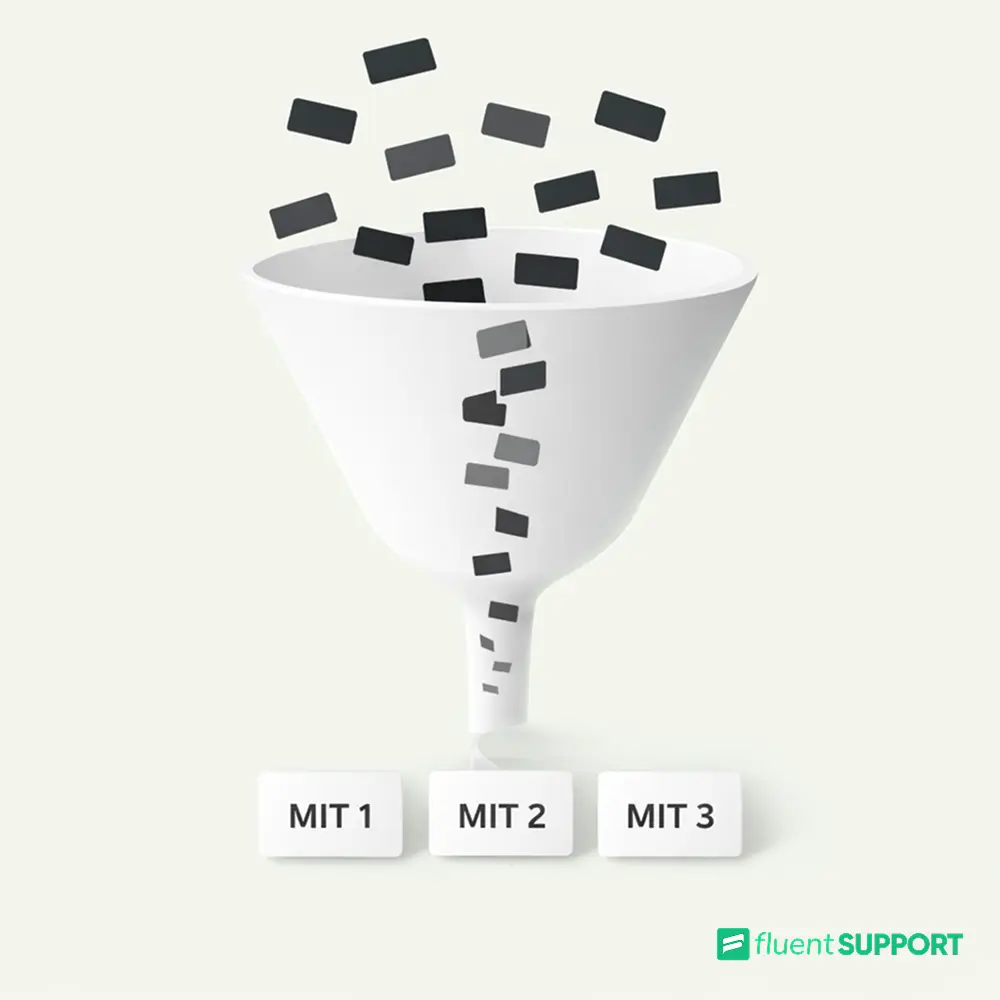
- Do a weekly brain dump: Once a week, list every task across every project in one place. Not categorized yet, just captured. This step alone reduces the cognitive load that makes prioritization feel impossible.
- Separate the list by context: Once everything is listed, split tasks into four buckets:
- Things only you can do
- Things you can delegate
- Things that need a decision before they can move
- Things with a fixed external deadline
- Protect your first 90 minutes: The early part of the workday, before the inbox fills and requests pile in, is the highest-value time for most people. Block it for your MITs. Treat it as a non-negotiable appointment.
- Build in a daily 5-minute review: At the end of each day, spend five minutes recalibrating. What shifted? What did not get done? What gets carried forward and what gets dropped? This prevents the backlog from building silently and keeps your list honest.
- Use tools that reduce friction: Teams that invest in agent productivity tools often see the biggest gains not from doing more but from removing the decisions that interrupt focused work.
The hidden cost of getting this wrong
Skipping prioritization is not neutral. The downstream effects are real and measurable.
- According to workplace research, the average employee spends 51% of the workday on tasks of low or no value
- After a single interruption, it takes an average of 23 minutes to fully refocus, per University of California Irvine research
- For support professionals and team leads, unfocused task management leads directly to team burnout and recovery backlogs that take weeks to clear
Prioritization is not a productivity hobby. It is a form of operational care for yourself and for the people who depend on your output.
Wrapping up
Prioritization is not about being more disciplined or more organized. It is about making a deliberate decision once a day or once a week about what matters most and then working outward from that decision.
The Eisenhower Matrix helps you sort urgency from importance. MoSCoW helps you manage scope. The MIT method gives you a daily anchor. None of them require perfection. They require consistency.
Start with one, use it for a week, and adjust from there. The goal is a workday where effort and impact actually point in the same direction.
FAQs
What is the difference between urgent tasks and important tasks?
Urgent tasks demand immediate attention due to timing or external pressure. Important tasks carry real impact on your goals. A task can be urgent without being important, most notifications fall into this category.
How do I prioritize when everything on my list feels equally critical?
Write everything down in one visible list, then ask which item has the highest consequence if it does not get done today. Most situations that feel equally critical become clearer once the full list is in front of you rather than in your head.
Should I use the same prioritization framework every day?
Not necessarily. The MIT method works well for daily individual planning while MoSCoW suits project-level decisions. Many people combine both by starting the day with three MITs drawn from a MoSCoW-organized project list.
How long does it realistically take to build a prioritization habit?
Most people find that consistent daily practice for two to three weeks creates a noticeable shift. The first week feels mechanical. By the third week, the morning review and MIT selection start to feel automatic rather than effortful.
Related Articles
Fluent Support 2.1.0: Agent Groups, Agent Signatures, and Cloud File Storage
Fluent Support 2.1.0 is here! This is a…The Ritz-Carlton Gives Employees $2,000 to Spend on You
Discover how Ritz-Carlton’s $2,000 rule, based on customer…






Leave a Reply