

Customer Retention Strategies: 12 Ways to Keep Customers

By Md. Sajid Sadman
June 10, 2026
Last Modified: June 10, 2026


You spend months and real money winning a customer. Then they quietly leave after one bad experience, and you never find out why.
Most companies pour their budget into acquisition while existing customers slip out the back door. That leak is expensive, because the people most likely to buy again are the ones you already have.
Customer retention is how you close that gap and turn one-time buyers into steady revenue.
This blog covers what customer retention is, why it matters, how to measure it, and 12 strategies you can use to keep customers longer.
Key Takeaways
- Customer retention is a company’s ability to keep existing customers over time and turn them into repeat buyers, rather than losing them to competitors.
- It is far cheaper than acquisition: winning a new customer costs 5 to 25 times more than keeping one, and a 5% lift in retention can raise profits by 25% to 95% (HBR).
- Measure it with the retention rate formula, ((E − N) / S) × 100, and treat 90% or higher as a strong benchmark for most industries.
- The strategies that actually move the needle are specific, not generic: engineer the first-value moment, reduce customer effort, fix involuntary churn from failed payments, score churn risk early, and prove value before every renewal.
- The best brands raise switching costs and build belonging: Amazon with Prime, Starbucks with visible rewards, Spotify with personalization and Wrapped, and Sephora with tiers and community.
- Avoid the common traps: chasing new customers while ignoring existing ones, treating retention as a discount problem, and collecting feedback you never act on.
What is customer retention?
Customer retention is a company’s ability to keep its existing customers over a period of time, turning one-time buyers into repeat customers. It is the opposite of churn, which measures the customers you lose.
So while customer acquisition is about winning new buyers, retention is about keeping the ones you already have. Both matter, but retention is usually the cheaper and more profitable side of growth.Strong retention starts at the very first interaction and continues across the whole relationship. It leans heavily on customer experience and the value people feel they keep getting from you.
Why is customer retention important?
Customer retention matters because the numbers behind it are hard to argue with. Run through the figures below and the case for it makes itself.
Start with cost. Keeping a customer is far cheaper than winning a new one, since acquiring a new customer costs 5 to 25 times more than retaining an existing one (Harvard Business Review).
The profit math is just as striking. A 5% increase in customer retention can raise profits by 25% to 95% (Bain & Company), partly because loyal customers buy more often and cost less to serve.
Existing customers are also easier to sell to, at a 60 to 70% success rate versus 5 to 20% for a new prospect. Lose them and it stings, since 85% of CX leaders say customers leave after a single unresolved issue (Zendesk), which makes every interaction part of your customer lifetime value.
How to calculate customer retention rate
Customer retention rate is the percentage of customers you keep over a set period. You calculate it with one simple formula:
| Retention rate = ((E − N) / S) × 100 S = customers at the start of the period E = customers at the end of the period N = new customers gained during the period |
Here is a quick example.
Say you start the quarter with 1,000 customers, gain 200 new ones, and end with 1,100. Your retention rate is ((1,100 − 200) / 1,000) × 100, which equals 90%.
A rate of 90% or higher is excellent for most industries, though the right target varies by sector. Tracking it next to your customer churn rate gives you the full picture, since the two move in opposite directions.
Customer retention strategies
Most retention advice stops at “be fast and personalize.” The strategies that actually move the needle are sharper than that, so here are 12 with the play and the metric that proves each one works:
- Engineer the first-value moment
- Reduce customer effort, not just response time
- Fix involuntary churn before anything else
- Build a churn-risk health score
- Segment by behavior and lifecycle
- Use pricing and contracts as a retention lever
- Prove value before every renewal
- Turn self-service into friction removal
- Close the feedback loop with a recovery system
- Reward behavior, not just spend
- Build community as a real switching cost
- Track cohort retention and Net Revenue Retention
1. Engineer the first-value moment
Retention is mostly decided at activation, not slowly over time. The customers who reach a clear first win in their first session are the ones who are still around a year later.
Define your one activation milestone, the specific action that separates users who stay from users who leave, like a team sending its first 50 tickets or an account importing real data. Then strip every onboarding step that does not lead straight to it, and trigger help the moment a user stalls before reaching it.
A guided onboarding flow built around that milestone beats a generic welcome tour every time.
Watch activation rate and time-to-value as your earliest retention signals, long before renewal is on the table.
2. Reduce customer effort, not just response time
Customers rarely leave because one reply was slow. They leave because solving a problem was hard, with repeated transfers, re-authentication, and having to explain the same issue twice.
Low-effort experiences drive loyalty far more than trying to delight, so measure First Contact Resolution and Customer Effort Score instead of speed alone. Hunt down the friction that does the real damage and remove it, because effortless good customer service is what keeps people from quietly shopping around.
Give agents full context and past history on every ticket so the customer never has to repeat themselves to get unstuck.
Just a heads up: this gets easier when every past ticket and note sits on one screen. Fluent Support is a WordPress helpdesk that does exactly that, so your team can solve the issue without making anyone repeat themselves.
3. Fix involuntary churn before anything else
A large slice of subscription churn is not a decision at all. It is failed and expired card payments, and most teams spend on experience while quietly losing customers to a billing error.
Set up dunning with smart retry logic, payment-failure emails, automatic card-updater services, and a short grace period before access is cut. This is the highest-return retention work you can do, because the customer already wanted to stay and recovering them costs almost nothing.
Track involuntary churn as its own number, separate from customers who actively chose to leave.
4. Build a churn-risk health score
By the time a customer complains, they have usually already decided to go. The real warning signs live in behavior, not in a survey response.
Combine login frequency, feature adoption, ticket sentiment, and recent support data into a single health score, then set a hard trigger, like a 40% drop in usage, that routes an account to outreach automatically. The goal is to reach at-risk customers while there is still time to save them.
Measure your save rate on flagged accounts, not just your overall churn number, so you know the early-warning system actually works.
5. Segment by behavior and lifecycle
A new user, a power user, and a dormant user need completely different treatment. One message blasted to all three is why so many retention campaigns fall flat.
Split your base by recency, frequency, and value, or by lifecycle stage, then match the action to the segment: re-onboarding for the stalled, expansion offers for power users, and win-back for the lapsing. Mapping this to the real types of customers you serve makes every touch land harder.
Track retention per cohort so you can see exactly which segment is leaking instead of guessing from an average.
6. Use pricing and contracts as a retention lever
Pricing structure is a retention tool, not only a revenue one. A monthly plan hands a customer twelve chances a year to quit, while an annual plan gives them one.
Nudge customers toward annual terms with a genuine incentive, and align price to the value metric so cost scales with the value they actually get. A pause option matters too, because a paused customer is not a churned one and often comes back.
Watch the retention gap between monthly and annual customers to see how much the contract length alone is worth.
7. Prove value before every renewal
Customers churn at renewal when they cannot remember what they got. Silence between purchase and renewal is where deals quietly die.
Send usage and outcome reports that name the result, such as “you resolved 1,240 tickets and cut response time by 30%,” and for B2B run value reviews tied to the exact goal the customer bought you to solve. When the impact is visible, the renewal stops feeling like a fresh decision and starts feeling earned.
Tie each report back to the outcome the customer cared about, not to the features they happened to click.
8. Turn self-service into friction removal
Most customers would rather solve a problem themselves than wait in a queue. Done right, deflection is a faster experience for them, not just a cheaper one for you.
Build a knowledge base mapped directly to your top ticket drivers, and surface contextual help inside the product at the exact point people get stuck, rather than burying it in a separate site. Help that appears where the problem happens beats a help center nobody can navigate.
Track self-service success rate, since unanswered searches just create a second, angrier ticket.
9. Close the feedback loop with a recovery system
Collecting feedback is common. Visibly acting on it is rare, and that gap is exactly where trust erodes.
Use NPS for the overall relationship and Customer Effort Score or CSAT per interaction, then route every detractor into a recovery workflow within 24 hours. Reading the real customer needs behind low scores, then publishing a clear “you said, we did,” is often what converts a critic into an advocate.
The recovery itself, not the survey, is the part that actually retains the customer.
10. Reward behavior, not just spend
Discount-heavy loyalty programs train customers to wait for the next deal and attract the people least likely to stay. Money off is the weakest form of loyalty you can buy.
Reward referrals, engagement, and advocacy instead, and use tiers that unlock status and access rather than only price cuts. A program built this way deepens real customer loyalty instead of renting it one coupon at a time.
Measure the incremental retention lift of members versus non-members, because sign-up counts alone tell you nothing.
11. Build community as a real switching cost
A customer embedded in your community, with connections and a reputation, faces a cost to leave that has nothing to do with your features. That is the kind of retention a rival cannot undercut on price.
Create user groups, certifications, and ambassador roles that give people a stage and a status they would lose by walking away. Pair it with proactive support so engaged members feel looked after, not just useful to you.
The deeper someone is woven into the community, the less a competitor’s discount means to them.
12. Track cohort retention and Net Revenue Retention
A single blended retention number hides everything that matters. It can stay flat while your newest customers churn faster than ever.
Chart retention by signup cohort to see exactly where the curve flattens, and track Net Revenue Retention, where anything above 100% means expansion from existing customers outpaces churn before you add a single new one. Pairing these with omnichannel support data shows you where loyalty is built and where it leaks.
These two views tell you whether your product is genuinely getting stickier or just treading water.
Customer retention examples
The strongest brands treat retention as a system, not a discount. Each example below pairs a famous tactic with the principle behind it, so you can borrow the mechanism instead of just admiring the brand.
Amazon: make leaving feel like a loss
Amazon turned retention into a membership. Prime bundles fast shipping, video, music, and member-only deals into one yearly fee, so a customer is not deciding whether to buy from a store, they are deciding whether to give up an entire ecosystem.
That bundle raises the switching cost on purpose. The more of those services a customer leans on, the more leaving costs them, which is why Prime members order far more often than non-members.
The lesson is to make staying more valuable than the price of staying. Stack enough genuine value into the relationship that walking away feels like a loss, not a saving.
Starbucks: reward the habit and show progress
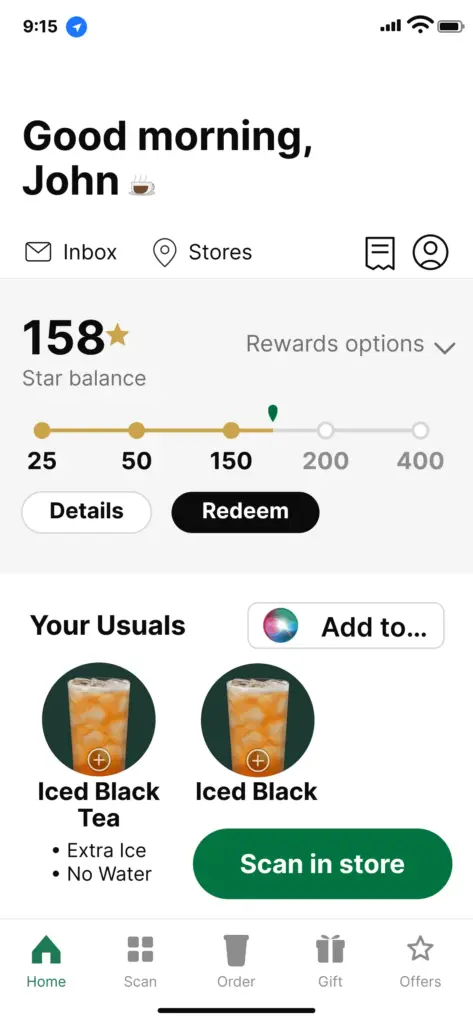
Starbucks Rewards made loyalty feel like a game. Customers earn Stars on every order, watch a progress bar climb toward a free drink, and receive offers shaped by what they actually buy.
It works on two levels. The visible progress pulls people back to hit the next reward, and the order data quietly powers smarter, more personal offers, so each visit makes the next one more relevant.
The takeaway is to reward the behavior you want and make progress impossible to miss. People stay when they can see how close they are to the next win.
Spotify: personalize, then prove the value
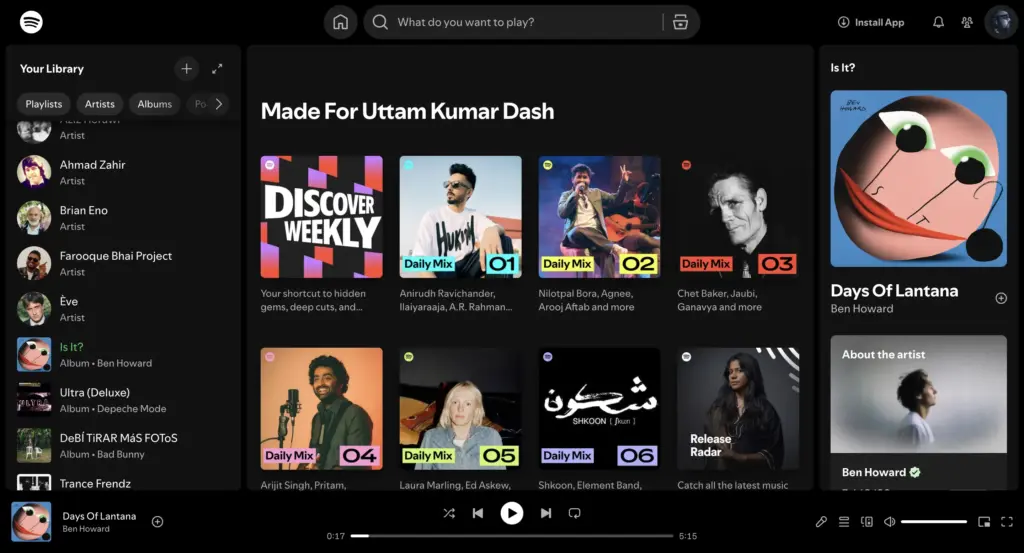
Spotify retains listeners by knowing their taste better than they do. Discover Weekly and daily mixes turn a huge music library into a feed that feels built for one person.
Once a year, Spotify Wrapped hands every user a personal recap of their listening and nudges them to share it. It works as a value reminder and free marketing at once, because it shows customers in plain numbers how much they used the product.
The lesson is that personalization plus a visible value recap are two of the strongest retention tools you have. Show people the value they already got, and renewing stops being a question.
Sephora: build status and belonging
Sephora’s Beauty Insider blends points, tiers, and a community into one program. Members climb from Insider to VIB to Rouge as they spend, unlocking better perks and visible status at each level.
The Beauty Insider Community adds the piece most loyalty programs miss. Members ask questions, share looks, and build a presence, which gives them a reason to stay engaged in the long gaps between purchases.
The takeaway is that status and belonging retain customers as powerfully as any coupon. A tier people want to keep, paired with a community they are part of, is hard for a competitor to copy.
Common customer retention mistakes
Plenty of retention efforts fail for the same avoidable reasons. Knowing them is half the fix.
Wrapping Up
You now have a clear view of what customer retention is, why it pays off, how to measure it, and twelve strategies to put to work. That is the full toolkit most teams never assemble in one place.
Start with one or two strategies that fit your business right now, measure the effect, then build from there. Retention is not a single campaign, it is a habit you keep refining.
Win a customer once and you make a sale, but keep them and you build a business.
Start off with a powerful ticketing system that delivers smooth collaboration right out of the box.
Frequently asked questions
Retention is the behavior of customers continuing to buy from you, while loyalty is the emotional preference behind that behavior. A customer can be retained simply because switching feels like a hassle, but a loyal customer stays because they genuinely want to.
Acquisition is about winning brand-new customers, while retention is about keeping the ones you already have. Acquisition fills the top of the funnel, and retention protects the value of everyone already inside it.
For most established businesses, retention delivers more value for less effort, since keeping a customer is easier than convincing a new one to trust you. Even so, healthy growth usually needs both working together rather than one at the expense of the other.
There is no single magic number, because a good rate depends heavily on your industry and business model. The most useful benchmark is your own trend over time, alongside a comparison against direct competitors in your sector rather than a universal target.
They are two sides of the same coin. Retention measures the share of customers you keep over a period, while churn measures the share you lose, so improving one automatically improves the other.
Customers usually leave because of effort and neglect rather than price alone. Hard-to-resolve problems, feeling ignored, and never being shown the value they are getting push people away far more often than a competitor’s offer does.
The fastest wins usually come from removing friction: make support easier to reach, smooth out onboarding, and act visibly on the feedback customers give you. Fixing the small frustrations that push people away tends to work faster than launching a big new program.
Related Articles
26 Best Ticketing System Software in 2026
The best ticketing system software in 2026 includes…Fluent Support 2.4.5: Remote Portal, New Workflow Triggers and more
Fluent Support 2.4.5 lets you run the customer…


Add your first comment to this post