

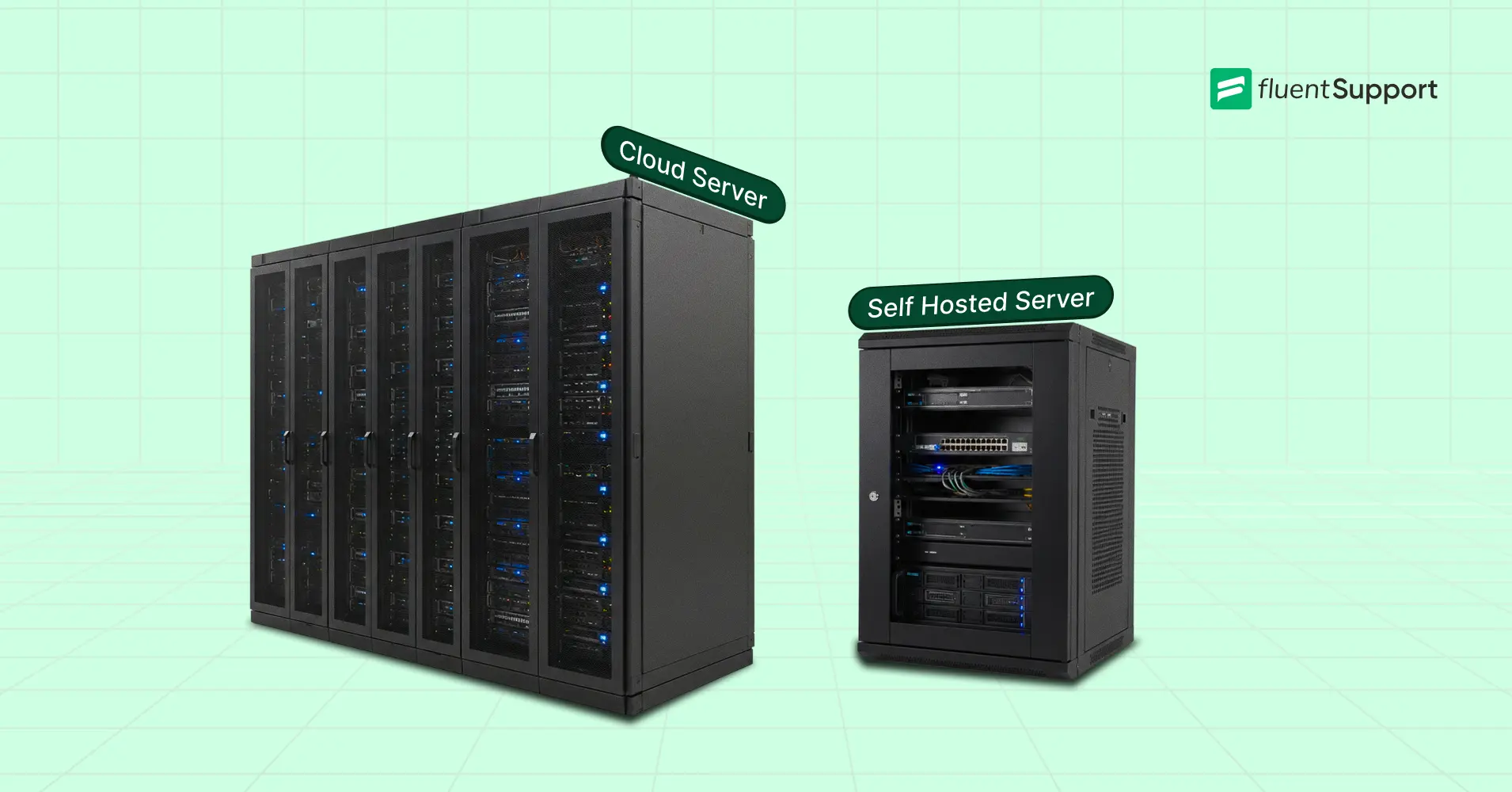
SaaS Helpdesk vs Self Hosted Helpdesk: Who Actually Holds Your Data?

By Md. Ariful Basher
July 3, 2026
Last Modified: July 3, 2026


Everyone frames saas helpdesk vs self hosted helpdesk as a hosting decision. It’s not. It’s a data custody decision. SaaS puts your support data on the vendor’s multi-tenant infrastructure, under their access controls, their retention policy, their breach response timeline. Self hosted puts that same data on infrastructure you provision and administer, full stop. That’s the actual fork, not uptime, not UI, not who patches what.
A help desk manager at a US university posted a simple question to a popular software vendor’s community forum back in 2020: should we move our self-hosted service desk to the cloud? She wasn’t asking for a definition. She’d been running self-hosted for years. She was asking a much harder question, the one most teams only ask after they’re already stuck: is what we have still worth managing ourselves?
Here’s the part nobody mentions upfront. Even wanting your own data back from a SaaS vendor usually means opening a support ticket and waiting. Some vendors cap what you can pull at once, last two years only, or a few hundred records per export. That’s the actual tradeoff hiding behind the convenience pitch. Someone else handles the server. You no longer fully control what’s yours.
TL;DR
- A SaaS helpdesk is software the vendor owns, runs, and updates. You rent access.
- A self hosted helpdesk runs on infrastructure you control. You own the data, and the responsibility.
- Cloud based vs self hosted help desk decisions usually come down to three things: agent count, IT bandwidth, and compliance rules.
- Self hosted wins on data sovereignty, source code access, and long-term cost at scale.
- SaaS wins on setup speed, zero maintenance, and automatic updates, but exporting your own data can mean a support ticket and a capped window.
- On WordPress, self hosting doesn’t mean managing a server from scratch. It can mean installing a plugin.
- Data spread across multiple environments costs more to breach than data kept on premises, according to IBM’s 2025 report.
SaaS Helpdesk vs Self Hosted Helpdesk: What You’re Actually Choosing Between
A SaaS helpdesk is software someone else owns, hosts, and updates, and you access it through a browser for a monthly fee. A self hosted helpdesk is software you install and run on infrastructure you control, whether that’s a physical server, a VPS, or your own cloud instance.
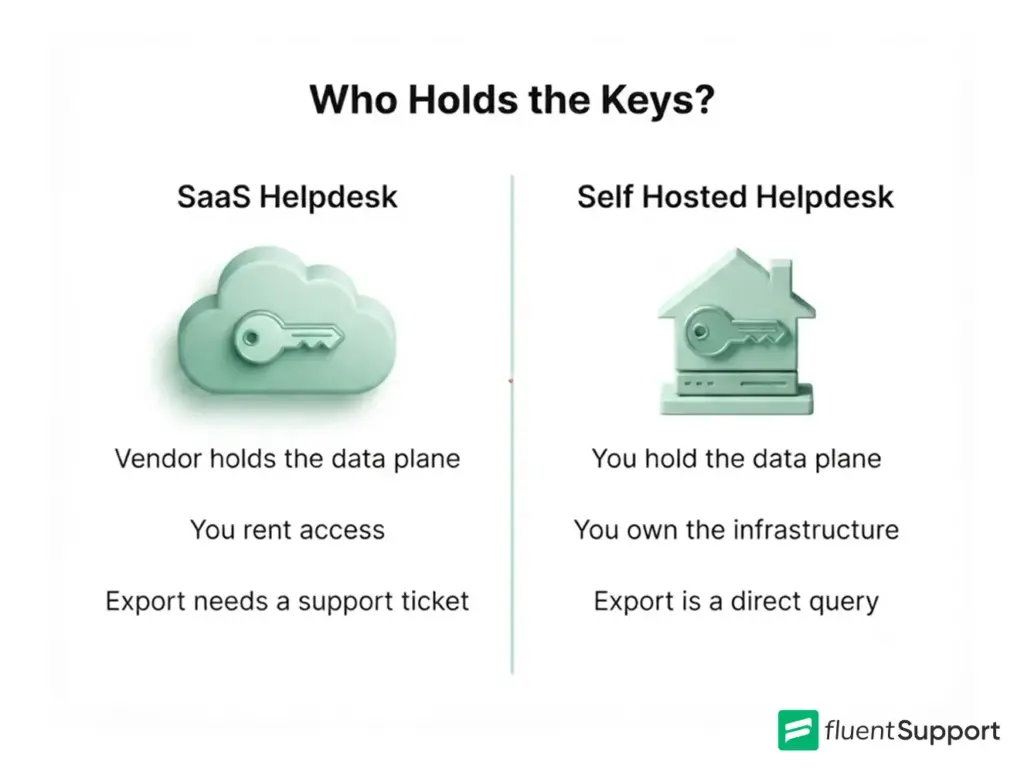
That’s the whole distinction. Skip the analogy. What matters is who holds the keys to your data plane. With SaaS, the vendor does. With self hosted, you do. That’s the difference between deleting a customer’s record yourself and filing a request and hoping it lands before an audit does.
Cloud Based vs Self Hosted Help Desk: The Real Decision Framework
Three questions do most of the work.
How many people are answering tickets? Under five agents with no dedicated IT person, cloud wins almost every time. Past a certain scale, per-agent SaaS fees stack up fast, and self hosted stops looking optional.
Does someone already own infrastructure? Not “could someone figure it out,” but “does someone already do this.” If not, self hosting will cost more in stress than it saves in fees.
What do your compliance rules actually require? Healthcare, finance, and legal work often mandate data residency no SaaS vendor’s terms of service can fully satisfy. When that’s true, this stops being a real decision. Support behavior backs this up too, customers expect fast resolution and clear data handling in the same breath, especially after trust breaks once.
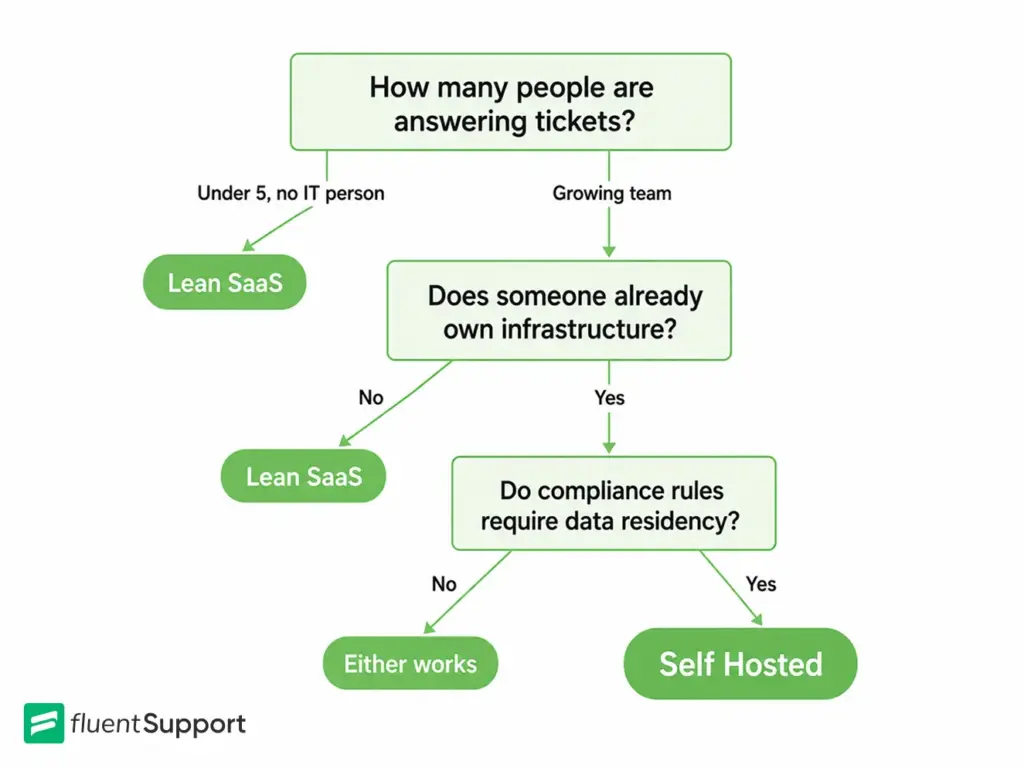
That’s the filter. Here’s the evidence behind each answer.
Why SaaS Wins on Speed
Setup takes minutes. No server to provision, no SaaS stack to configure. The vendor pushes updates while you sleep, and if their database crashes at 3 a.m., that’s their engineer’s problem, not yours.
Most businesses don’t feel the real cost of that convenience until year three, when the per-agent fee has quietly outgrown what a server would have cost, and their data still lives on someone else’s terms.
The Legal and Technical Case for Self Hosting
Support tickets carry more sensitive data than people assume. Names, emails, order histories, sometimes health details buried in a message. Under GDPR, a customer can request their data be erased. On a self hosted system, that’s a direct database query, real data sovereignty instead of a promise in someone else’s terms of service. On SaaS, it’s a support ticket to a vendor, and you’re trusting their timeline, not yours.
IBM’s 2025 Cost of a Data Breach Report found something worth sitting with: breaches involving data spread across multiple environments, public cloud, private cloud, and on-premises together, cost an average of $5.05 million, while breaches on data kept entirely on premises averaged closer to $4 million. Every third party touching your support data is one more environment an attacker can pivot through.
This isn’t only a legal argument, it’s a technical one. Self hosted software lets your IT team build workflows the vendor never anticipated, instead of filing a feature request and waiting six months.
Where Self Hosting Actually Hurts
Self hosting means you own the uptime, the patches, and the backup schedule, and if you skip one, you own the consequences too.
On a popular self-hosting community, one long-time user of an open-source ticketing tool put it plainly: it “may feel quite heavy to setup and use.” That’s from someone who still runs it daily. The tool wasn’t the problem. The setup curve was.
If you’re running WordPress already, this changes. A helpdesk plugin for WordPress like Fluent Support just installs on hosting you’re already paying for and already securing. No new server, no separate stack, no midnight page. The traditional self-hosted tax is server operations, and that tax mostly disappears when self hosted means a plugin, not a machine.
So, Which One Actually Wins?
Neither model is the villain here. SaaS is the right call for a lean team that just wants tickets answered without hiring anyone new. Self hosted is the right call the moment you can’t afford to hand a stranger the keys to customer data, whether that’s a legal mandate or just a gut feeling you can’t shake.
What’s changed is the cost of choosing self hosted. It used to mean a server, a sysadmin, and a maintenance calendar. On WordPress, it can mean a plugin install during your coffee break. That shift is why the saas helpdesk vs self hosted helpdesk question isn’t as one-sided as it used to be.
If you already run WordPress and control means more to you than convenience, start there. Everything else in this decision follows from that one honest answer.
Start off with a powerful ticketing system that delivers smooth collaboration right out of the box.
Related Articles
Fluent Support 2.4.7: Ticket Filters, 5x Faster Tickets and Smart Customer Search
Fluent Support 2.4.7 brings a Ticket Filters sidebar…Customer Success Best Practices for Small Teams
In this blog, we’ve discussed customer success in…


Add your first comment to this post