

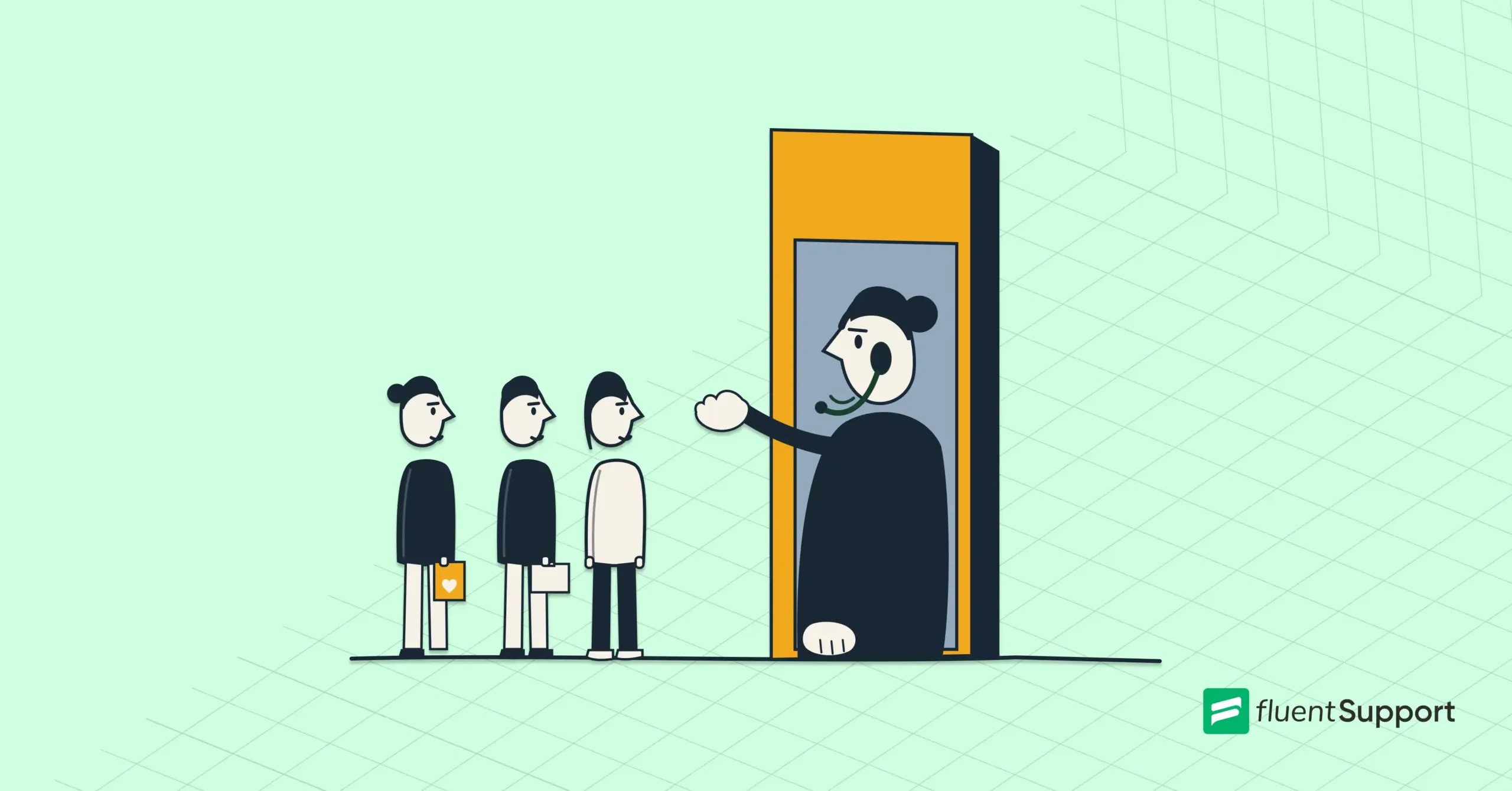
Customer Facing Roles That Quietly Make or Break Your Brand

By Md. Sajid Sadman
June 15, 2026
Last Modified: June 15, 2026


One rude reply, and a customer is gone for good. One warm, helpful exchange, and they stay for years.
The person behind that exchange holds a customer facing role. They are the part of your company a customer actually sees, so their performance shapes how the whole brand gets judged.
Customer facing roles cover far more jobs than most people realize, from support agents to sales reps to field technicians.
This blog breaks down what customer facing means, the main customer facing roles with examples, the skills they demand, and how to excel in one.
Key Takeaways
- Customer facing means interacting directly with customers. A customer facing role is any job where you deal with customers in person, by phone, email, chat, or social media.
- The term also describes software a customer uses directly, like an app or portal, but it most often refers to people and jobs.
- Common customer facing roles include support agents, salespeople, account and success managers, retail staff, receptionists, field technicians, and community managers.
- They differ from back-office or internal-facing roles, which keep the business running without direct customer contact.
- The skills that matter most are communication, empathy, active listening, problem-solving, patience, and product knowledge.
- These roles shape brand perception and retention, since one poor experience can send a customer straight to a competitor.
What does customer facing mean?
Customer facing means interacting or communicating directly with customers. A customer facing role is any job where part of the work involves dealing with customers directly, whether in person, over the phone, by email, on live chat, or across social media.
You will also see the term used a second way, to describe technology. A customer facing application is software a customer uses directly, like a booking portal or a banking app, as opposed to internal tools only staff ever touch.
Both senses share one idea: customer facing is whatever the customer actually sees and interacts with. For the rest of this guide, the focus is on the people and the roles.
What is a customer facing role?
So how do you know if a job counts as customer facing? The simple test is direct contact. If the role regularly puts you in front of customers, it is customer facing.
That contact can be face to face, like a retail associate, or fully digital, like a chat agent working across multiple support channels. It can happen before the sale with a prospect, or years into the relationship with a loyal customer.
What unites them is impact. These employees are the face of the company, so their words and tone become the brand in that moment. A customer rarely sees the engineers or the finance team, but they always see the person who serves them.
Common customer facing roles with examples
Customer facing roles show up in almost every industry, from retail and hospitality to SaaS, healthcare, and finance. Here are nine of the most common, along with what each one does:
1. Customer support agent
Support agents handle questions, complaints, and technical problems after the sale, across email, live chat, phone, and social. Day to day they troubleshoot issues, update account details, process refunds, and log bugs for the product team.
They are the most frequent point of contact a customer has, so the quality of their replies shapes the whole relationship. The hard part is staying accurate and calm across dozens of conversations a day, many of them already frustrated.
2. Sales representative
Sales reps guide prospects from first interest to a signed deal. They qualify leads, run demos, answer objections, and follow up until the customer decides.
This is customer facing at the most decisive moment, when someone is choosing whether to trust you with their money. A SaaS account executive running demos and a car dealership salesperson both live here, and the best ones listen for the real need instead of just pitching features.
3. Account manager
Account managers own the long-term relationship with existing clients, especially in B2B. They handle renewals, spot chances to add value, and keep the partnership healthy through regular check-ins and performance reviews.
Unlike a one-time sale, the work never really ends, since it runs on steady contact and trust. At a marketing agency, an account manager might plan a client’s yearly campaigns, recommend new services as trends shift, and adjust strategy well before the contract is up for renewal.
4. Customer success manager
A customer success manager makes sure customers actually reach their goals with your product so they renew and grow. They blend onboarding, training, and strategy, and they step in before a problem becomes a ticket.
Where support reacts to issues, success prevents them by watching usage and health signals to catch risk early. You find the role most in subscription and SaaS businesses, where retention is the engine of revenue.
5. Technical support specialist
A technical support specialist takes the harder, more technical problems that frontline agents escalate. They run detailed troubleshooting, reproduce bugs, and work alongside engineering on the fix.
The role demands deep product knowledge and the patience to sit with a messy problem until it breaks. Picture the second-tier agent who takes over once a simple reset has failed and real debugging begins.
6. Retail associate and cashier
Retail associates and cashiers meet customers face to face on the sales floor and at checkout. They answer product questions, process payments, handle returns, and keep the in-store experience moving.
Every complaint lands with them in real time, with no screen to hide behind and no time to draft a careful reply. Composure and quick judgment under pressure are the heart of the job.
7. Receptionist and front desk staff
Receptionists and front desk staff are the first human a visitor meets, in offices, hotels, and clinics alike. They greet people, point them in the right direction, book appointments, and field the phone.
That first thirty seconds sets the tone for everything that follows, which is why the role carries more weight than it looks. A warm, organized front desk can rescue someone’s bad day, while a cold one can sink an otherwise good experience.
8. Field service technician
Field technicians travel to the customer’s home or site to install, repair, or maintain equipment, from cable installers to appliance repair techs to HVAC pros. They are often sent in after something has already gone wrong.
They represent the brand inside the customer’s own space, so professionalism and a clear explanation matter as much as the technical fix. A rushed or messy visit damages trust even when the repair itself works.
9. Community and social media manager
Community and social media managers handle public, visible interactions on social platforms, forums, and brand communities. They answer questions, defuse complaints, and build relationships where everyone can watch.
Because the audience is public, one reply can calm a pile-on or fuel it, so the stakes per message are unusually high. The best ones turn casual followers into advocates, like a gaming community manager who runs tournaments and spotlights top contributors.
Customer facing vs back-office roles
Not every job touches the customer, and that is by design. Back-office or internal-facing roles keep the business running behind the scenes, without direct customer contact.
The real difference is exposure. A customer facing employee is judged by customers in real time, while a back-office employee is judged by results and internal teams.
| Customer facing roles | Back-office (internal-facing) roles |
|---|---|
| Support agents, sales reps, account managers | Developers, accountants, data analysts |
| Deal with customers directly | No direct customer contact |
| Shape brand perception in real time | Shape the product and operations behind it |
| Lean on communication and empathy | Lean on technical and analytical skill |
Both groups matter, and the strongest companies make sure the two work closely together rather than in silos. A great product means little if the people delivering it leave customers frustrated.
Why customer facing roles matter
Customer facing roles matter because they are where loyalty is won or lost. A single interaction can decide whether a customer stays or leaves, and people remember how they were treated, which becomes their customer experience of your brand.
The stakes are real. Most customers will walk away after just one or two bad experiences, and 85% of CX leaders say a single unresolved issue is enough to make them leave.
That puts a lot of weight on the few minutes a customer facing employee spends with each person.
Strong customer facing teams protect customer satisfaction and retention, while weak ones quietly send customers to competitors. They also feed the rest of the business with frontline insight about what customers actually need.
Essential customer facing skills
Great customer facing employees share a core set of customer service skills. These are the ones that matter most:
- Communication: Clear, warm communication across every channel is the foundation. Practice writing simply and reading tone, since one sentence can calm or inflame a customer.
- Empathy: Customers want to feel understood before they feel helped. Acknowledge the frustration first, then move to the fix.
- Active listening: Really hearing the problem prevents wrong answers and repeat contacts. Let the customer finish, then reflect back what you heard.
- Problem-solving: Most of the job is diagnosing an issue and finding the best way out. Curiosity and a willingness to research separate good agents from great ones.
- Patience: Frustrated customers and tricky problems test composure daily. Staying calm keeps a hard conversation from getting harder.
- Product knowledge: You cannot help with what you do not understand. Keep learning the product so answers are fast, accurate, and confident.
- Openness to feedback: The best people improve by acting on a customer feedback loop and coaching instead of resisting it.
How to succeed in a customer facing role
Skill on paper is not enough. The people who deliver good customer service run a handful of specific plays that most agents never learn:
Lead with the answer, then the reason
Most agents bury the fix under a paragraph of setup. Put the resolution in the first line and the explanation underneath it.
Example: A customer asks if they can change plans mid-cycle. Instead of opening with billing policy, lead with “Yes, you can switch right now, here is the one-click way to do it,” then add the proration detail below.
Name the emotion before you solve
A customer who feels rushed past stays angry even after the fix lands. Acknowledge the specific feeling first, then move to the solution.
Example: Someone messages that your app crashed during a live demo to their own client. Open with “That is a brutal time for it to happen, I am sorry,” before you touch a single troubleshooting step.
Mirror the customer’s words and drop your jargon
Use the customer’s own terms instead of your internal language. It proves you heard them and saves them from translating.
Example: If a user writes “my dashboard is frozen,” reply about their “frozen dashboard,” not a “rendering issue in the UI layer.” Keep the internal phrasing for your private notes.
Promise a specific time, then beat it
Vague timelines breed anxiety, while specific ones build trust, and beating them builds loyalty. Predictability earns more goodwill than raw speed.
Example: Instead of “we will look into it,” say “I will have an update for you by 2pm today.” Then send it at 1:40, even if the update is just “still digging, here is where I am.”
Own it to resolution instead of transferring
Every handoff invites the customer to repeat themselves and lose faith. When you must bring in someone else, pass the full context and stay on the thread.
Example: A billing question needs your finance team. Rather than “please contact billing,” write “I have looped in our billing lead with all your details, and I will stay on this thread until it is sorted.”
Say no by offering the yes you can give
Never leave a customer at a dead end, even when the literal answer is no. There is almost always a next step you can hand them.
Example: A customer wants a feature you do not offer. Instead of “we do not support that,” try “we do not have that yet, but here is a workaround that gets you the same result, and I have logged your request with the product team.”
Build a reset between hard conversations
Burnout, not the next ticket, is the real threat to performance. The people who last protect their energy on purpose.
Example: After a long, heated chat, take two minutes before the next one, a short walk or a breath, so the last customer’s frustration does not leak into the next person’s greeting.
Review your hardest conversations, not your easy ones
Growth hides in the tickets that went sideways, not the ones that went smoothly. Studying your worst interactions is the fastest way to improve.
Example: Pull the chat that escalated last week and find the exact message where the tone turned. Maybe you answered the wrong question or missed a frustration cue, and fixing that one pattern lifts every interaction after it.
The tools behind great customer facing teams
Even a talented team turns slow and inconsistent with the wrong stack. Customer facing work has a specific tool set, and each piece removes a specific kind of friction:
A helpdesk with full customer history
A shared helpdesk puts every past ticket, order, and note on one screen, so an agent opens a conversation already knowing who they are talking to. That single view is what stops customers from repeating themselves and lets one agent pick up exactly where another left off. Tools in this category include Zendesk, Freshdesk, Help Scout, and Front, plus Fluent Support if you run on WordPress.
Just a heads up: Fluent Support brings that whole-customer view to teams already running on WordPress, with every past ticket and note in one place. See how it fits your stack on the Fluent Support features page.
A self-service knowledge base
A knowledge base lets customers solve the common questions themselves and gives agents one canonical answer to work from. It cuts repetitive tickets and keeps replies consistent no matter who is on shift. Popular options include Document360, Helpjuice, and the knowledge bases built into Zendesk or HubSpot.
A CRM for context
A CRM holds the plan, purchase history, and lifecycle stage behind each customer. With it, a rep tailors the conversation instead of treating a ten-year client like a first-time visitor. HubSpot, Salesforce, and Pipedrive are common choices, and most connect straight into your helpdesk.
Automation and workflows
Support automation handles the mechanical work: assigning tickets, routing by topic, triggering follow-ups, and flagging anything close to breaching an SLA. It keeps work from slipping through the cracks when volume spikes. You get this inside platforms like HubSpot Service Hub and Zendesk, while Zapier links the tools that do not talk to each other natively.
Proactive outreach tools
Proactive support features let you reach customers before they hit a wall, like a heads-up about a known outage or a check-in after onboarding. Catching the problem early prevents the angry ticket entirely. Intercom and Tidio are well known for proactive messages, product tours, and triggered check-ins.
Reporting that tracks the right metrics
Dashboards that surface first response time, resolution time, and CSAT let you coach on data instead of gut feel. You can spot the struggling agent or the slow channel before customers start complaining. Lean on the dashboards built into your helpdesk, like Zendesk Explore or HubSpot reporting, before paying for a separate analytics tool.
Wrapping Up
You came in asking what a customer facing role is, and now you have the whole map: what the term means, the nine roles that fill it, how they differ from the work happening backstage, the skills that carry them, and the specific plays that separate the great from the average.
Here is the part worth holding onto. Every other team in your company builds the product, but customer facing teams are the product as far as the customer is concerned. So if you are hiring, lead with empathy and communication and teach the rest. If you are growing into one of these roles, pick two plays from this guide and run them until they stop feeling like effort.
Customers forget the features pretty fast. They remember how a person made them feel, and that person is you.
Start off with a powerful ticketing system that delivers smooth collaboration right out of the box.
Frequently asked questions
A customer facing role is any job that involves direct interaction with customers, whether in person, by phone, email, live chat, or social media. Support agents, salespeople, and account managers are all common examples.
They mean almost the same thing. Client facing is more common in B2B and professional services, while customer facing is used more broadly across retail, SaaS, and consumer businesses.
Yes. Sales is one of the most customer facing roles there is, since reps interact directly with prospects and customers throughout the buying process.
Customer facing roles involve direct customer contact, while back-office or internal-facing roles support the business without it, such as developers, accountants, and analysts.
The core skills are communication, empathy, active listening, problem-solving, patience, and strong product knowledge. Most of them can be developed with practice and good coaching.
In tech, customer facing describes any application or interface a customer uses directly, like a mobile app, a booking portal, or a self-service account page.
Related Articles
Fluent Support 2.4.7: Ticket Filters, 5x Faster Tickets and Smart Customer Search
Fluent Support 2.4.7 brings a Ticket Filters sidebar…Customer Success Best Practices for Small Teams
In this blog, we’ve discussed customer success in…




Add your first comment to this post